

Методы устранения неполадок при блокировке холодильной системы
Время выпуска:
Mar 12,2024
Холодильная система-это общий термин для оборудования и трубопроводов, по которым течет хладагент, включая компрессоры, конденсаторы, дроссельные устройства, испарители, трубопроводы и вспомогательное оборудование. Это основной компонент системы кондиционирования воздуха, охлаждения и холодильного оборудования.
The refrigeration system is a general term for the equipment and pipelines through which the refrigerant flows, including compressors, condensers, throttling devices, evaporators, pipelines and auxiliary equipment. It is the main component system of air conditioning equipment, cooling and refrigeration equipment.
The blockage failure of the refrigeration system has many forms such as ice blockage, dirty blockage and oil blockage. The unified fault characteristics of blockage are: the condenser is not hot when touched, the evaporator is not cold, the compressor operating current is smaller than normal, the pressure gauge is connected to the bypass charging valve, indicating negative pressure, the outdoor unit is running light, and there is no sound of liquid in the evaporator.
Causes and fault phenomena of ice blockage
The occurrence of ice blockage failure is mainly due to excessive moisture in the refrigeration system. With the continuous circulation of refrigerant, the moisture in the refrigeration system gradually concentrates at the outlet of the capillary tube. Since the temperature at the outlet of the capillary tube is the lowest, the water freezes into ice and gradually increases. To a certain extent, the capillary tube is completely blocked, the refrigerant cannot circulate, and the refrigerator does not refrigerate.
The main source of moisture in the refrigeration system is: the motor insulation paper in the compressor contains moisture, which is the main source of moisture in the system. In addition, the components and connecting pipes of the refrigeration system have residual moisture due to insufficient drying; the refrigeration oil and refrigerant contain more moisture than the allowable amount; during the assembly or maintenance process, the pipeline is in an open state for a long time, causing the moisture in the air to be absorbed by the motor insulation paper and refrigeration oil. Due to the above reasons, the water content of the refrigeration system exceeds the allowable amount of the refrigeration system, resulting in ice blockage. On the one hand, ice blockage causes the refrigerant to be unable to circulate and the refrigerator cannot refrigerate normally; on the other hand, moisture will also react chemically with the refrigerant to generate hydrochloric acid and hydrogen fluoride, causing corrosion to metal pipes and components, and even causing insulation damage to the motor windings. At the same time, it will also cause the refrigeration oil to deteriorate and affect the lubrication of the compressor. Therefore, the moisture in the system must be controlled to a minimum.
The manifestation of ice blockage in the refrigeration system is that it works normally in the initial stage, frost in the evaporator, heat dissipation in the condenser, stable operation of the unit, and clear and stable sound of refrigerant activity in the evaporator. As ice blockage forms, the airflow can be heard to gradually weaken and intermittently. When the blockage is serious, the airflow sound disappears, the refrigerant circulation is interrupted, and the condenser gradually cools down. Due to the blockage, the exhaust pressure increases, the machine running sound increases, no refrigerant flows into the evaporator, the frosting area gradually decreases, the temperature gradually increases, and the capillary temperature also rises, so the ice begins to melt, and the refrigerant begins to circulate again. After a period of time, ice blockage occurs again, forming a periodic pass-blocking phenomenon.
Causes and failure phenomena of dirty blockage
The formation of dirty blockage failure is caused by excessive impurities in the refrigeration system. The sources of impurities in the system are mainly: dust and metal chips in the refrigerator manufacturing process, the oxide layer of the inner wall falls off during pipe welding, the inner and outer surfaces of each component are not cleaned during the processing process, the pipeline is not tightly sealed and dust enters the pipe, the refrigeration oil and refrigerant contain impurities, and the poor quality desiccant powder in the dry filter. Most of these impurities and powders are removed by the filter drier when they flow through it. When there are more impurities in the filter drier, some fine dirt and impurities are brought into the capillary by the refrigerant with a higher flow rate, and are retained and accumulated in the capillary bend with greater resistance. The resistance is getting bigger and bigger, making it easier for impurities to be retained until the capillary is blocked and the refrigeration system cannot circulate. In addition, the close distance between the capillary and the filter in the filter drier can also easily cause dirty blockage failure; in addition, when welding the capillary and the filter drier, it is also easy to weld the capillary tube mouth.
After the refrigeration system is dirty and blocked, the refrigerant cannot circulate, so the compressor runs continuously, the evaporator is not cold, the condenser is not hot, the compressor shell is not hot, and there is no airflow sound in the evaporator. If it is partially blocked, the evaporator feels cool or icy, but no frost. When touching the outer surface of the filter drier and the capillary, it feels very cold, there is frost, and even a layer of white frost. This is because when the refrigerant flows through a slightly blocked filter drier or capillary, a throttling and pressure reduction effect is generated, causing the refrigerant flowing through the blockage to expand, vaporize, and absorb heat, resulting in condensation or frost on the outer surface of the blockage.
The difference between ice blockage and dirty blockage: After a period of ice blockage, refrigeration can be restored, forming a periodic repetition of being unblocked for a while, blocked for a while, unblocked again, unblocked again. However, refrigeration cannot be achieved after dirty blockage occurs.
In addition to dirty blockage of the capillary, if there are too many impurities in the system, the filter drier will gradually be blocked. Because the filter itself has a limited capacity to filter out dirt and impurities, it will be blocked due to the continuous accumulation of impurities.
Oil blockage and other pipeline blockages
The main reason for oil blockage in the refrigeration system is that the compressor cylinder is severely worn or the clearance between the piston and the cylinder is too large.
The gasoline discharged from the compressor is discharged into the condenser, and then enters the drying filter together with the refrigerant. Due to the high viscosity of the oil, it is blocked by the desiccant in the filter. When there is too much oil, it forms a blockage at the filter inlet, so that the refrigerant cannot circulate normally and the refrigerator does not refrigerate.
The reasons for the blockage of other pipelines are: blockage by solder when welding the pipeline; or when replacing the pipe, the replaced pipe itself is blocked without being discovered. The above blockages are all caused by human factors. Therefore, it is required to operate and check as required when welding and replacing the pipe, so as not to cause artificial blockage failure.
Methods for eliminating blockage in the refrigeration system
1. Elimination of ice blockage
Ice blockage failure occurs in the refrigeration system because there is excessive water in the system, so the entire refrigeration system must be dried. There are two treatment methods:
1. Use a drying oven to heat and dry each component. Remove the compressor, condenser, evaporator, capillary tube, and return air pipe in the refrigerant system from the refrigerator, put them in a drying oven for heating and drying. The temperature in the oven is about 120℃, and the drying time is 4 hours. After natural cooling, use nitrogen to blow and dry them one by one. Replace the new drying filter, and then assemble and weld, pressurize and leak test, vacuumize, fill refrigerant, test run and seal. This method is effective in eliminating ice blockage, but it is only suitable for the warranty department of the refrigerator manufacturer. General repair departments can use heating and vacuuming to eliminate ice blockage.
2. Use heating and vacuuming and secondary vacuuming to eliminate moisture from various components of the refrigeration system.
2. Elimination of dirty blockage
There are two ways to eliminate the dirty blockage of the capillary: one is to use high-pressure nitrogen combined with other methods to blow out the dirt of the blocked capillary. After the capillary is blown through, the components in the refrigeration system are cleaned and dried, and then reassembled and welded to eliminate the fault. If the capillary is seriously blocked and the above method cannot eliminate the fault, the fault can be eliminated by replacing the capillary, which is described as follows:
1. Use high-pressure nitrogen to blow out the dirt in the capillary: cut the process pipe to drain the liquid, weld the capillary from the filter drier, connect the three-way repair valve to the compressor process pipe, fill it with 0.6-0.8MPa high-pressure nitrogen, and straighten the capillary to heat it with a gas welding carburizing flame to carbonize the dirt in the pipe, and blow out the dirt in the capillary under the action of high-pressure nitrogen. After the capillary is unblocked, add 100 ml of carbon tetrachloride for aeration and cleaning. The condenser can be cleaned with carbon tetrachloride on the pipeline cleaning device. Then replace the filter drier, fill it with nitrogen for leak detection, evacuate, and finally fill it with refrigerant.
2. Replace the capillary: If the above method cannot flush out the dirt in the capillary, the capillary can be replaced together with the low-pressure pipe. First, use gas welding to remove the low-pressure pipe and capillary from the copper-aluminum joint of the evaporator. When disassembling and welding, the copper-aluminum joint should be wrapped with wet cotton yarn to prevent the aluminum tube from being burned by high temperature.
When replacing the capillary, the flow rate should be measured. The capillary outlet should not be welded to the evaporator inlet first. The repair valve and pressure gauge are installed at the suction and exhaust inlet and outlet of the compressor respectively. After the compressor is running, air is sucked from the low-pressure repair valve. When the suction pressure is equal to the external atmospheric pressure, the indicated pressure of the high-pressure gauge should be stable at 1-1.2MPa. If the pressure exceeds, it means that the flow rate is too small. You can cut off a section of the capillary until the pressure is appropriate. If the pressure is too low, it means that the flow rate is too large. You can coil the capillary several times to increase the resistance of the capillary, or replace a capillary. After the pressure is appropriate, weld the capillary to the inlet pipe of the evaporator.
When welding a new capillary, the length inserted into the copper-aluminum joint should be about 4-5cm to avoid welding blockage. When welding the capillary tube to the filter drier, the insertion length should be 2.5cm. If the capillary tube is inserted too much into the filter drier and too close to the filter screen, tiny molecular sieve particles will enter the capillary tube and block it. If the capillary tube is inserted too little, impurities and molecular sieve particles during welding will enter the capillary tube and directly block the capillary channel. Therefore, the capillary tube should not be inserted too much or too little into the filter. Too much or too little will cause the danger of blockage. Figure 6-11 shows the connection position of the capillary tube and the filter drier.
III. Troubleshooting of oil blockage
Oil blockage indicates that there is too much refrigeration oil remaining in the refrigeration system, which affects the refrigeration effect or even fails to refrigerate. Therefore, the refrigeration oil in the system must be cleaned.
When the filter is oil blocked, a new filter should be replaced, and high-pressure nitrogen should be used to blow out part of the refrigeration oil accumulated in the condenser. When nitrogen is introduced, a hair dryer can be used to heat the condenser.
Новости
Как устранить проблему замерзания испарителя чиллера?
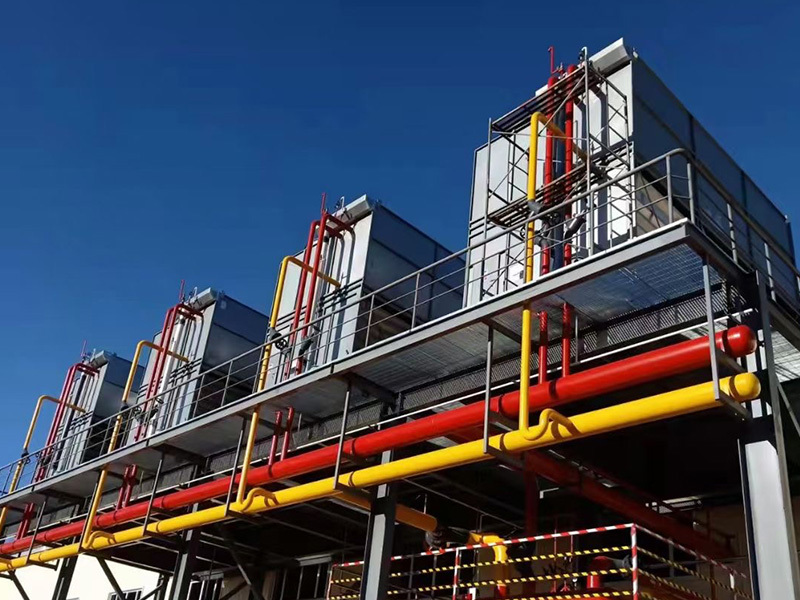
Недостаточно хладагента. Из чиллера может протекать или просачиваться хладагент из-за длительной установки или времени использования. Когда хладагент в холодильной системе уменьшается, давление испарения слишком низкое, что приводит к льду на испарителе. Лед, как правило, находится в передней части испарителя. Метод устранения неполадок заключается в том, чтобы сначала разобраться с протекающей частью и добавить достаточное количество хладагента, и неисправность будет устранена.
Как решить проблему низкой холодопроизводительности и высокого энергопотребления агрегата
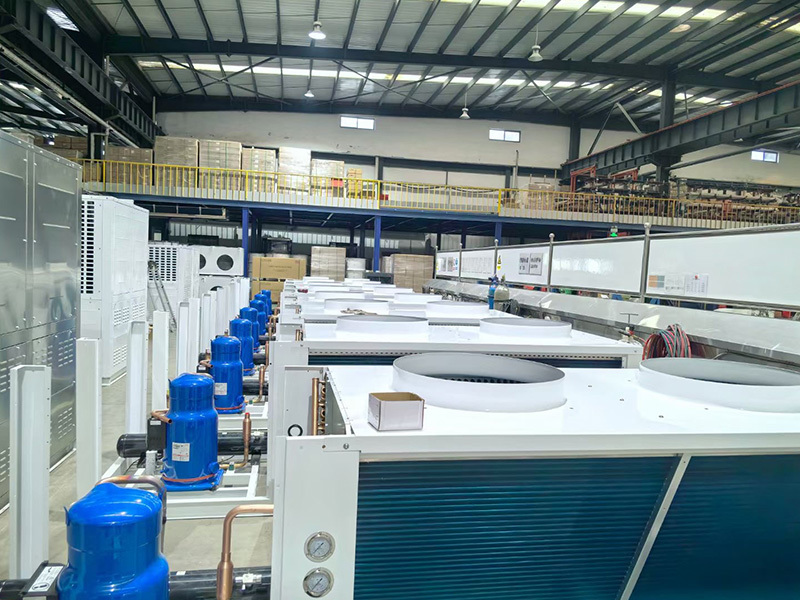
После длительного использования конденсатор склонен к образованию накипи в трубах. Если он не обработан вовремя, эти весы будут влиять на эффект теплообмена, вызывая повышение температуры конденсации агрегата, что, в свою очередь, приводит к снижению холодопроизводительности и увеличению энергопотребления агрегата. Таким образом, конденсатор должен быть часто descaled.
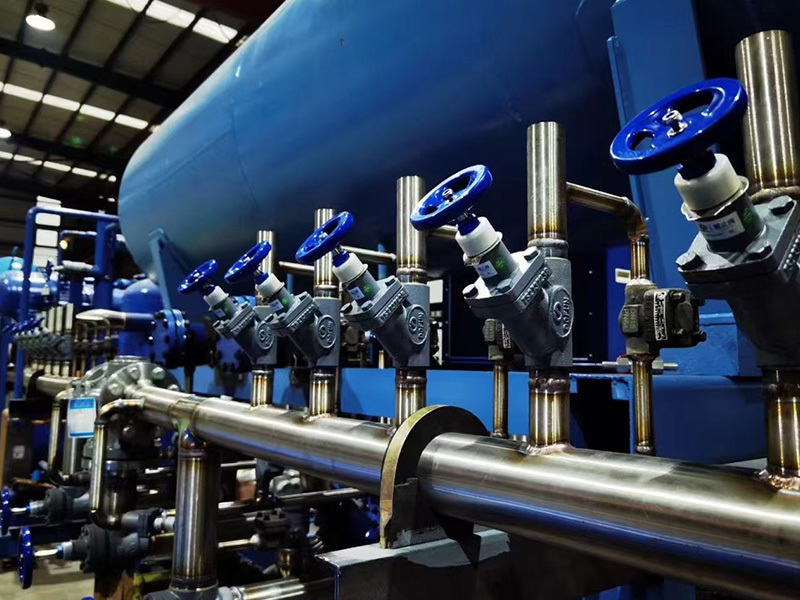
Основными причинами перегрева температуры выхлопных газов являются следующие: высокая температура возвратного воздуха, нагрев большого двигателя, высокая степень сжатия, высокое давление конденсации и неправильный выбор хладагента.

На что следует обратить внимание при проектировании логистики холодовой цепи?
На что следует обратить внимание при проектировании логистики холодовой цепи? Логистика холодовой цепи является для нас важным способом транспортировки продуктов питания. Появление логистики холодовой цепи сделало нашу еду больше не сезонной. На что следует обратить внимание при проектировании логистики холодовой цепи?
Причины перегрева выхлопа холодильного компрессора
Основные причины перегрева температуры выхлопных газов в системе охлаждения заключаются в следующем: высокая температура возвратного воздуха, нагрев большого двигателя, высокая степень сжатия, высокое давление конденсации и неправильный выбор хладагента.
Распространенные причины тепловой защиты компрессора холодильной системы
Защита от перегрузки: когда давление выхлопных газов компрессора превышает номинальное значение, компрессор запускает программу защиты от перегрева. Операция потери фазы (одна фаза отсутствует в трехфазном электричестве): когда компрессор имеет слишком большой однофазный ток или потерю фазы во время работы, это также приведет к отключению компрессора.
Продукция


Контакты нас
Электронная почта:jnxbcrefrigeration@outlook.com
WhatsApp:86-195-4611-1527
Адрес: Комната 1812-01, здание Лонгшанг, дорога Но.55 Дамацяо, улица Хуашан, район Личенг, город Джинан, провинция Шаньдуна, Китай
Message
Авторские права©Компания Jinan New Beyond Экологическая технология